Vietnam Tightens Treadmill Energy Test Rules
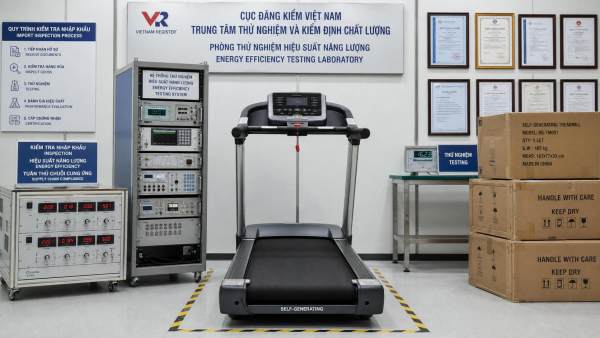
On July 8, 2026, Vietnam’s Ministry of Industry and Trade issued implementing guidance under Decree 68/2026/ND-CP that changes how imported self-generating treadmills must complete energy-efficiency verification. The new requirement ties compliance to testing by VILAS-accredited local laboratories under TCVN 8929:2026 and rejects CNAS or IECEE CB reports as substitutes. For importers, exporters, certification teams, and delivery planners, this is worth attention because it directly affects market-entry documentation, testing arrangements, timing, and per-shipment compliance cost ahead of the September 1, 2026 start date.
What the new rule formally requires
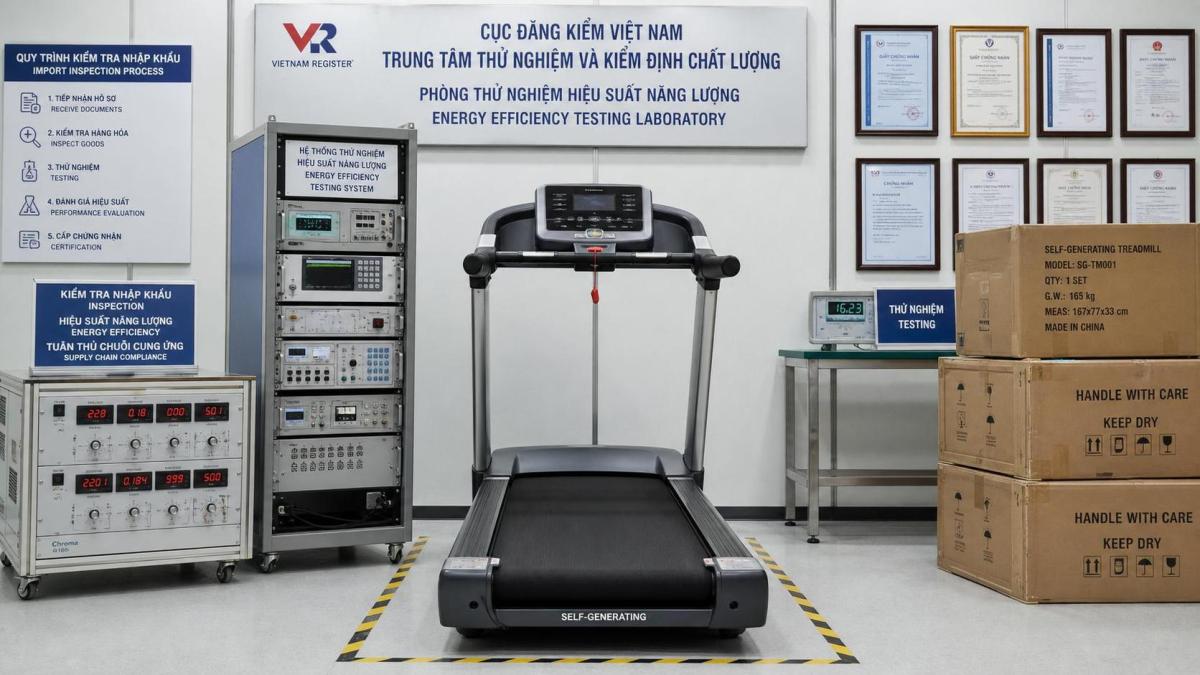
The confirmed facts are limited but clear. Vietnam’s Ministry of Industry and Trade released implementing details for Decree 68/2026/ND-CP on July 8, 2026. Under those details, all imported self-generating treadmills must undergo energy-efficiency verification in a local laboratory accredited by VILAS, using TCVN 8929:2026. The rule also states that CNAS reports and IECEE CB reports may not be accepted as alternatives for this verification. The requirement takes effect on September 1, 2026, and the expected additional certification cost is about $1,200 per container.
Where the pressure is likely to appear in the supply chain
Import clearance and market-entry preparation
From an industry perspective, import-oriented trading companies are among the first to feel the impact because the rule changes the evidence that can support compliance. If a business previously relied on CNAS or IECEE CB documentation for related market-entry preparation, that approach can no longer substitute for the required local VILAS-accredited verification. The practical pressure point is documentation readiness before shipment arrival and before goods are positioned for sale or distribution.
Export planning for suppliers serving Vietnam
Suppliers and exporters shipping self-generating treadmills into Vietnam may need to reassess lead-time assumptions, because the required verification is no longer framed around foreign reports that some companies may already hold. Analysis shows this matters less as a design issue and more as a delivery and handover issue: technical files, test scheduling, and customer commitments may all need to reflect the local laboratory requirement under TCVN 8929:2026.
Certification and testing coordination
Certification-related service providers and testing coordinators are also likely to be affected because the new rule narrows the acceptable verification path. What deserves closer attention is not only the standard cited, but the fact that accreditation status of the laboratory becomes a core compliance condition. That shifts part of the workload toward confirming laboratory eligibility, report usability, and alignment between product documentation and the required local test route.
Procurement, delivery, and landed-cost control
Procurement teams, distributors, and supply-chain service providers may need to account for both timing and cost adjustments. The expected increase of about $1,200 per container creates a direct landed-cost variable, while the testing requirement may affect booking plans, shipment batching, and delivery promises. Observably, the rule is relevant not only to compliance staff but also to commercial teams responsible for pricing, inventory timing, and customer delivery schedules.
What companies should review now
Check whether current report strategies still work
Companies handling self-generating treadmills for the Vietnamese market should first review whether their current compliance files rely in any way on CNAS or IECEE CB reports for energy-efficiency acceptance. Based on the released rule summary, those documents cannot replace the required VILAS-accredited local verification, so any internal checklist, bid file, or shipment file built around that assumption needs rechecking.
Rebuild timelines around the September 1 start date
Analysis shows the implementation date matters operationally because it creates a near-term cutoff for how shipments and compliance activities are sequenced. Businesses should pay attention to whether orders, dispatch timing, testing appointments, and delivery commitments intersect with the September 1, 2026 effective date. The current information does not provide a fuller execution timetable, so this should be treated as a planning watchpoint rather than a confirmed procedural outcome.
Review technical and transactional documents
What deserves closer attention is the consistency between technical documents and trade documents. Product specifications, test-related materials, internal compliance records, and transaction paperwork may all need to reflect the required local verification route under TCVN 8929:2026. For companies selling through distributors or project buyers, document alignment may also matter in tenders, procurement reviews, or acceptance checks.
Track official wording and market-side execution
Because the available information confirms the rule direction but does not provide full execution detail, companies should continue monitoring how the requirement is described in official notices, certification practice, procurement documents, and customer-side compliance requests. Observably, the key issue is not whether the rule exists, but how consistently it is applied across import handling, product acceptance, and commercial documentation after the effective date.
How this should be read at this stage
This is more appropriate to understand as a concrete execution signal rather than a vague policy discussion. The rule does not merely point to higher energy-efficiency expectations; it identifies a specific verification pathway, a named local accreditation framework, a referenced standard, and an express refusal to accept CNAS or IECEE CB reports as substitutes. At the same time, analysis shows there is still reason to keep watching implementation practice, because the available input does not define the full operational interpretation that businesses may face in day-to-day clearance, procurement, or acceptance processes.
A practical reading of the change
In practical terms, the development matters because it moves compliance for imported self-generating treadmills in Vietnam toward a more localized verification model. For affected companies, the immediate significance is not abstract regulatory change but a narrower testing route, added cost per container, and potential adjustments in documentation and delivery planning. At this point, it is more appropriate to read the update as an already announced rule change with real operational implications, while reserving judgment on the full market impact until implementation practice and industry feedback become clearer.
Basis of this article
This article is based on the user-provided news title, event date, and event summary. For developments of this kind, commonly relevant source types may include official ministry notices, releases from regulatory authorities, trade or customs authorities, standards organizations, industry association materials, and reporting by established professional media. A specific official source link was not provided in the input, so that link still needs to be verified. Continued attention is also warranted for later implementation details, certification practice, tender-document changes, market feedback, and how affected companies carry out the requirement in practice.
Related Intelligence
 Gym CAPEX & E-Bike DTC PremiumOct 27, 2026Commercial Ellipticals for Hotels: Space, Noise, and Durability ChecklistChoose commercial ellipticals for hotels with confidence. Explore our space, noise, and durability checklist to avoid costly mistakes and create a quiet, guest-friendly fitness room.
 Urban Commuter PedelecsOct 27, 2026Maryland Ranks Second in E-Bike and E-Scooter Deaths, Study SaysMaryland ranks second in e-bike and e-scooter deaths, a study says. Explore what the ranking means for rider safety, protective gear and the micromobility industry.
 Gym CAPEX & E-Bike DTC PremiumOct 26, 2026Fitness Equipment Market Intelligence: Demand Trends Guiding Gym CAPEXExplore the fitness equipment intelligence market to spot demand trends, prioritize gym CAPEX, and make smarter investments in capacity, reliability, and lifecycle value.
 Optical Heart Rate MonitorsOct 25, 2026Sports Performance Wearables Manufacturers: Heart Rate Accuracy and MOQ ChecksChoose a sports performance wearables manufacturer with confidence. Explore heart rate accuracy tests, MOQ checks, and pilot terms to reduce sourcing risk before you commit.
 Urban Commuter PedelecsOct 25, 2026California Passes Four Laws Targeting Unsafe E-Bike Use in Silicon ValleyCalifornia e-bike laws target unsafe riding in Silicon Valley with sales limits, age rules and helmet requirements. Learn what the four measures could mean for riders and sellers.
 Compression Recovery GearOct 24, 2026Digital Authority Building: How Businesses Turn Expertise Into Online TrustDiscover how digital authority building turns expertise into buyer trust. Learn to publish credible evidence, answer key questions, and guide prospects toward confident purchasing decisions.
 Urban Commuter PedelecsOct 24, 2026Washington DDOT to Fine Operators Over Improperly Parked E-Bikes and ScootersWashington DDOT will fine e-bike and scooter operators for delayed removal of improperly parked devices. Explore the parking rules and changes to low-income rider credits.
 Gym CAPEX & E-Bike DTC PremiumOct 23, 2026Self-Generating Fitness Equipment: Do Energy Savings Justify the Cost?Explore energy efficient fitness equipment with self-generating power. Compare real savings, purchase costs, and installation benefits to see what pays off for your gym.
 Direct Drive Smart TrainersOct 23, 2026Interactive Strength Q3 Update: Third Space Deploys Wattbike EquipmentInteractive Strength’s Q3 update highlights Wattbike equipment at Third Space’s London studio. Explore the deployment, Ergatta rowing classes and key insights for fitness equipment buyers.
 Magnetic Resistance Spin BikesOct 22, 2026Choosing Smart Indoor Bikes for Spin Classes: Connectivity and Durability ChecksChoosing smart indoor bikes for spin classes? Discover essential connectivity, durability, and service checks to reduce downtime and invest confidently in your studio.
 MIPS Carbon Cycling HelmetsOct 22, 2026Belgian Aerobag Cycling Airbag Named to TIME’s 2026 Best Inventions ListAerobag cycling airbag reportedly joins TIME’s 2026 Best Inventions list. Explore WorldTour testing, Nalini’s planned bib shorts and key safety questions for buyers.
 Optical Heart Rate MonitorsOct 21, 2026Wearable Fitness Technology Compliance: US and EU Rules for Heart Rate MonitorsExplore wearable fitness technology compliance for heart rate monitors. Navigate US FDA, FCC, EU MDR, radio, and privacy rules to support a confident market launch.
 Direct Drive Smart TrainersOct 21, 2026Garmin Launches Tacx Nēra Smart Indoor Trainer With Multi-Directional MovementDiscover the Garmin Tacx Nēra smart indoor trainer, featuring multi-directional movement and precise resistance for immersive indoor cycling. Explore what sets it apart.