EN 15194:2026 Adds New E-Bike Export Files
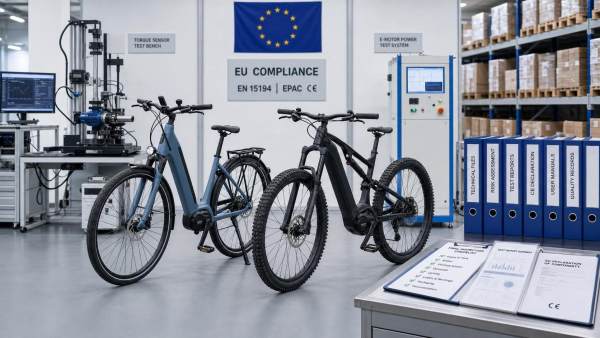
On July 28, 2026, the Official Journal of the European Union published the revised EN 15194:2026, introducing a new compliance step for electric power assisted cycles entering the EU market. For exporters, manufacturers, testing partners, and buyers involved in EPAC shipments, the change matters because it does not replace existing CE/EC type approval requirements but adds document obligations tied to torque sensor calibration and measured motor power output, with direct relevance for Urban Commuter Pedelecs and Mid-drive E-Mountain Bikes before shipment.
What the revised EN 15194:2026 now requires
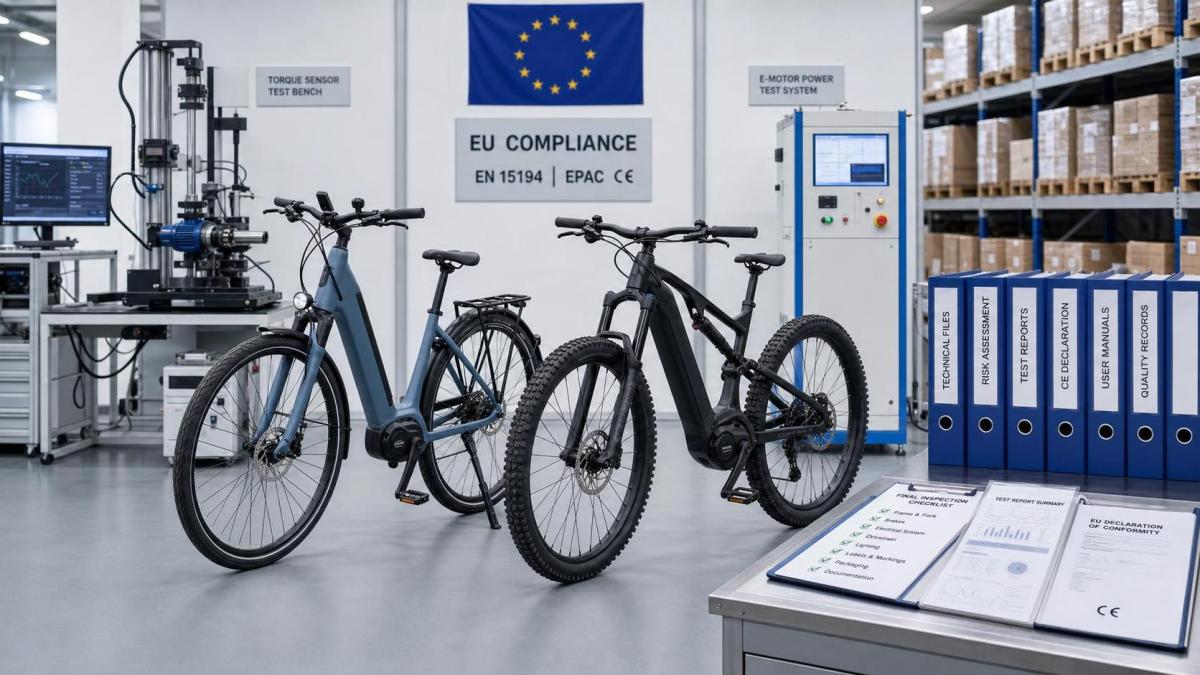
The confirmed facts are limited but clear. The revised EN 15194:2026 was published in the OJEU on July 28, 2026. For all EPAC products entering the EU market from October 1, 2026, companies must provide not only the existing CE/EC type certification materials, but also a dynamic torque sensor calibration report issued by an ISO/IEC 17025 accredited laboratory and a measured motor power output curve document. The event summary also states that the revised requirement directly affects the export compliance pathway for Urban Commuter Pedelecs and Mid-drive E-Mountain Bikes, and that Chinese manufacturers must complete third-party retesting and document traceability filing before shipment.
Where the pressure is likely to appear in the export chain
Pre-shipment compliance work becomes more document-driven
From an industry perspective, exporters and finished bike manufacturers are likely to feel the immediate impact because the new requirement adds specific technical files alongside existing type approval materials. The practical effect is that shipment readiness is no longer only about holding CE/EC type certification; it also depends on whether the torque sensor calibration report and motor power output curve test records are complete, current, and traceable.
Testing and certification coordination becomes a gating step
Analysis shows that certification-related service providers and laboratories may become a more central part of the delivery timeline. Because the required calibration report must come from an ISO/IEC 17025 accredited laboratory, companies involved in product release, conformity review, and technical file preparation will need to check whether their current testing arrangements and report formats align with the new filing expectation before export.
Procurement and buyer-side review may shift toward technical documentation
What deserves closer attention is the effect on procurement teams, distributors, and EU-facing buyers that review shipment documents. Even where product design remains unchanged, document packages may need updating to reflect the revised standard. In practice, this can influence purchase confirmation, acceptance review, and delivery scheduling for EPAC models covered by the new requirement.
Traceability obligations reach into supply chain management
The summary specifically mentions document traceability filing before shipment for Chinese manufacturers. Observably, this means the impact is not limited to testing alone. Supply chain service teams, quality teams, and export documentation staff may need to connect calibration records, power output test files, and shipment-level product records more tightly than before.
What companies should review before October 1
Check whether current EPAC files are still sufficient
Analysis shows that companies should review whether existing CE/EC type certification files for affected EPAC products are supported by the additional documents now required under EN 15194:2026. The key point is not to assume that prior certification files alone remain enough for post-October 1 market entry.
Confirm laboratory scope and retest timing
What deserves closer attention is whether the laboratory used for torque sensor calibration reports holds ISO/IEC 17025 accreditation for the relevant work. The event summary confirms a third-party retest requirement before shipment for Chinese manufacturers, so businesses should pay attention to retest scheduling and document issuance timing when planning export batches.
Review technical files for consistency and traceability
From an industry perspective, the new rule raises the importance of internal consistency across technical records. Companies should pay close attention to whether the torque sensor calibration report, measured motor power output curve file, and existing type approval documents can be traced and matched within the same export documentation set for the relevant models.
Watch for downstream changes in buyer and tender documentation
Because the input does not provide detailed enforcement language beyond the new filing requirement, it is more appropriate to understand buyer-side document checks, contract wording, and tender specifications as areas to monitor rather than confirmed outcomes. Even so, affected businesses should follow whether commercial document requests begin to reflect the revised standard in routine order execution.
Why this looks like an execution signal, not just a standards update
Analysis shows that this development is better understood as a concrete compliance signal rather than a purely formal standards revision. The reason is that the published change is tied to a defined effective date, adds named technical documents, and connects directly to pre-shipment retesting and traceability filing. At the same time, it would be premature to treat every downstream enforcement detail as settled, because the input does not provide fuller information on how different market participants will operationalize the requirement in documentation review or procurement practice.
How the market should read this stage of the change
The event points to a narrower but more demanding export compliance path for EPAC products entering the EU after October 1, 2026. A measured reading is that the rule change is already significant enough for affected companies to review testing, documentation, and shipment preparation now, especially for Urban Commuter Pedelecs and Mid-drive E-Mountain Bikes. More appropriately, this should be understood as a rule change with direct operational consequences, while some aspects of market execution and document-checking practice still warrant continued observation.
Basis of this article and points that still need verification
This article is generated from the user-provided news title, event date, and event summary. For events of this type, relevant source categories usually include official notices, regulator publications, trade or customs authority information, industry association updates, standards organization documents, and reporting from established industry media. A specific official source link was not provided in the input, so the underlying publication and later implementation details still need ongoing verification. What should continue to be monitored includes any further official wording, certification interpretation, tender document changes, industry feedback, and how companies execute retesting and traceability filing in practice.
Related Intelligence
 Carbon Stand-up PaddleboardsSep 12, 2026How to Choose Stand-Up Paddle Boards for Rental Fleets: Durability, Size, and CostChoose stand up paddle boards for rental with confidence. Compare durable construction, stable sizing, weight capacity, repairability, and lifecycle costs for a reliable fleet.
 Urban Commuter PedelecsSep 11, 2026Removable E-Bike Battery Systems: What to Check Before Choosing a Commuter BikeE-bike battery systems removable: compare range, removal ease, security, charging, weather protection, and replacement support before choosing your ideal commuter bike.
 Direct Drive Smart TrainersSep 10, 2026How to Choose a Smart Trainer in Germany for Zwift, Power Accuracy, and Warranty SupportSmart trainers Germany guide: compare Zwift connectivity, power accuracy, bike fit, noise, and warranty support to choose the right trainer with confidence.
 Magnetic Resistance Spin BikesSep 09, 2026Magnetic Resistance Spin Bikes: What to Compare Before You BuyMagnetic resistance spin bike buying guide: compare ride smoothness, stability, fit, flywheel design, connectivity, noise, and maintenance before choosing.
 Self-generating TreadmillsSep 08, 2026What to Evaluate in Self-Powered Fitness Equipment Consoles for Commercial GymsFitness equipment consoles self powered: evaluate power reliability, connectivity, durability, and maintenance to select commercial gym systems that improve uptime and member experience.
 Holographic Fitness MirrorsSep 07, 2026How Fitness Businesses Should Evaluate Virtual Training Platforms for GrowthVirtual training platforms can drive fitness business growth when they fit equipment, member journeys, data needs, and commercial goals. Explore a smarter evaluation framework.
 Magnetic Resistance Spin BikesSep 07, 2026How to Choose Smart Indoor Bikes With Touchscreens for Home TrainingSmart indoor bikes with touchscreen displays: compare fit, resistance, subscriptions, metrics, and home setup to choose a bike that keeps you training consistently.
 Aero Carbon Road BikesSep 05, 2026How to Choose a Gravel Bike for Mixed Terrain, Bikepacking, and Daily RidingGravel bikes for mixed terrain, bikepacking, and daily riding: compare tires, geometry, gearing, mounts, and brakes to find your ideal all-round bike.
 Aero Carbon Road BikesSep 04, 2026How to Evaluate Carbon Bike Frames Made in Italy Before Paying a PremiumDiscover how to evaluate carbon bike frames Italy before paying a premium. Compare materials, manufacturing quality, geometry, testing, compatibility, warranty, and total ownership value.
 Direct Drive Smart TrainersSep 03, 2026How to Choose a Smart Trainer for Consistent Winter Indoor Cycling WorkoutsSmart trainers for winter training: compare wheel-on, direct-drive, and smart bike options to find a quiet, compatible setup for consistent indoor workouts.
 MIPS Carbon Cycling HelmetsSep 02, 2026How to Choose Protective Sports Equipment in the USA for Club and Facility UseProtective sports equipment USA guide for clubs and facilities—compare fit, certification, cleaning, durability, and total cost to keep athletes protected.
 Holographic Fitness MirrorsSep 01, 2026Virtual Training Platforms for Gyms: What Should Buyers Evaluate?Virtual training platforms for gyms: explore key buyer checks for hardware compatibility, content, data, network reliability, lifecycle costs, and scalable member engagement.
 Eddy Currents & Wind Tunnel CFDAug 31, 2026Sports Aerodynamics CdA Explained: Interpreting Drag Area in Cycling TestsSports aerodynamics CdA explained: learn how to interpret cycling drag-area tests, compare equipment fairly, validate claims, and turn aerodynamic data into real performance gains.