EN 15194:2026 Enforcement Triggers First-Week Battery Holds

On July 1, 2026, the EU moved from standard publication to full enforcement of EN 15194:2026, and the first week already showed how directly the new battery safety requirement can affect trade. The immediate issue is not only the addition of thermal runaway propagation testing, but also how customs is treating missing third-party documentation in actual clearance. For e-bike exporters, battery pack suppliers, certification-related service providers, and buyers handling Urban Commuter Pedelecs or Mid-drive E-Mountain Bikes, this is a practical compliance and delivery signal rather than a purely technical standards update.
What has been confirmed in the first week of enforcement
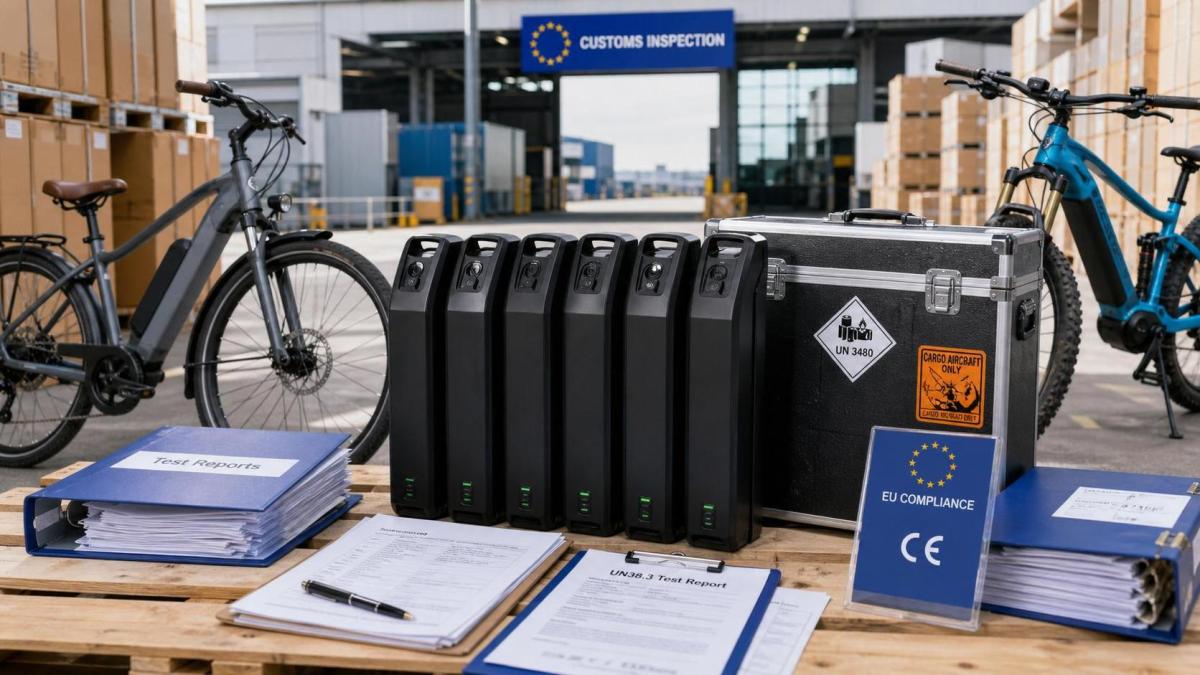
According to the information provided, EN 15194:2026 became fully mandatory in the EU on July 1, 2026. A new requirement was added for battery thermal runaway propagation testing. Based on the European Commission TBT notification and preliminary statistics from Dutch customs, more than 120 batches of Chinese-made e-bike battery packs were intercepted on the first day of enforcement. The main reason stated was the absence of third-party reports under the supplementary version of UL 2271 / IEC 62619-2. The event directly affects the export compliance route and customs clearance timing for Urban Commuter Pedelecs and Mid-drive E-Mountain Bikes.
Why this matters across the e-bike supply chain
Export shipments are now exposed at the documentation checkpoint
For exporters, the first impact is at the border rather than later in the market. Where battery packs cannot be supported by the required third-party reporting referenced in the provided information, shipment release and customs timing may be disrupted. What deserves closer attention is that compliance risk here is tied not only to product design, but also to the readiness of supporting documents at the time of export and clearance.
Battery pack suppliers face a tighter proof-of-compliance expectation
For battery pack manufacturers and upstream suppliers serving e-bike assemblers, the issue is likely to concentrate on test evidence and technical file completeness. The new thermal runaway propagation requirement changes the practical threshold for supplying into affected EU-bound projects. From an industry perspective, suppliers now need to pay closer attention to whether existing report sets match the enforced requirement and whether customers are asking for updated third-party documentation before shipment.
OEM assembly and model planning may be affected by battery compliance timing
For manufacturers of complete e-bikes, especially those shipping Urban Commuter Pedelecs and Mid-drive E-Mountain Bikes, battery compliance is no longer a background component issue. It can influence shipment scheduling, model readiness, and the sequencing of export deliveries. Observably, where battery documentation is incomplete, the risk moves upstream into production planning and order fulfillment rather than remaining limited to a laboratory or certification stage.
Testing and certification-related services may become a practical bottleneck
For testing bodies, certification-related firms, and procurement teams that rely on third-party reports during sourcing or tender review, the event points to a more immediate screening function for test documentation. The operational question is whether reports aligned with the enforced requirement are already in place and accepted for transaction and customs purposes. This is particularly relevant where procurement decisions or shipment approvals depend on pre-submitted compliance files.
What companies should check now
Review whether current battery reports match the enforced requirement
Analysis shows the most immediate task is to verify whether battery packs intended for the EU market are supported by third-party reports corresponding to the supplementary version of UL 2271 / IEC 62619-2 cited in the provided event summary. Companies should treat this as a document validity review tied to actual shipment use, not only as a general certification inventory exercise.
Recheck shipment files before customs-facing milestones
For teams handling export documentation, what deserves closer attention is the timing of file completion. If the required report is missing when goods reach a customs checkpoint, the commercial impact may show up as delayed clearance rather than a later corrective step. That makes pre-shipment document review, internal sign-off, and supplier file collection more important in the current stage of enforcement.
Pay special attention to the affected product categories
The provided information specifically points to Urban Commuter Pedelecs and Mid-drive E-Mountain Bikes. From an industry perspective, businesses shipping these categories should prioritize their compliance review there first, especially where battery packs are sourced from third parties or where multiple battery configurations exist under the same product line.
Keep watching for execution details beyond the initial interception signal
The current information confirms interception activity and the stated reason, but it does not provide a full enforcement playbook across all operational scenarios. Observably, companies should continue tracking how official wording, acceptance practice, procurement requirements, and customer document requests develop after the first week, especially before adjusting contract commitments or delivery promises.
How this signal should be read at this stage
Analysis shows this development is best understood first as an enforcement signal with immediate trade consequences, not merely as a standards update on paper. The key point is that the new requirement has already appeared in customs action linked to document availability. At the same time, it is more appropriate to understand the broader market impact as still developing, because the provided information does not establish a complete and final enforcement pattern beyond the reported first-day interceptions.
A compliance issue that has moved into real shipment operations
This event matters because it shows a direct connection between EN 15194:2026 enforcement, battery test documentation, and border execution. In practical terms, the issue now sits in export compliance routes and customs timing, especially for the product categories identified in the provided information. The most balanced reading at present is that this is a landed rule change with clear operational consequences, while the detailed execution scope and market response still require continued observation.
Basis of this article and points that still need verification
This article is generated from the user-provided news title, event date, and event summary. For events of this kind, relevant source types usually include official notices, regulator releases, customs or trade authority information, industry association updates, standards organization documents, and reporting from established media covering compliance and trade enforcement. No specific official source link was provided in the input, so further verification remains necessary. What still needs ongoing observation includes detailed enforcement interpretation, certification acceptance practice, tender or procurement document changes, industry feedback, and how companies implement the requirement in actual export operations.
Related Intelligence
 Gym CAPEX & E-Bike DTC PremiumOct 27, 2026Commercial Ellipticals for Hotels: Space, Noise, and Durability ChecklistChoose commercial ellipticals for hotels with confidence. Explore our space, noise, and durability checklist to avoid costly mistakes and create a quiet, guest-friendly fitness room.
 Urban Commuter PedelecsOct 27, 2026Maryland Ranks Second in E-Bike and E-Scooter Deaths, Study SaysMaryland ranks second in e-bike and e-scooter deaths, a study says. Explore what the ranking means for rider safety, protective gear and the micromobility industry.
 Gym CAPEX & E-Bike DTC PremiumOct 26, 2026Fitness Equipment Market Intelligence: Demand Trends Guiding Gym CAPEXExplore the fitness equipment intelligence market to spot demand trends, prioritize gym CAPEX, and make smarter investments in capacity, reliability, and lifecycle value.
 Optical Heart Rate MonitorsOct 25, 2026Sports Performance Wearables Manufacturers: Heart Rate Accuracy and MOQ ChecksChoose a sports performance wearables manufacturer with confidence. Explore heart rate accuracy tests, MOQ checks, and pilot terms to reduce sourcing risk before you commit.
 Urban Commuter PedelecsOct 25, 2026California Passes Four Laws Targeting Unsafe E-Bike Use in Silicon ValleyCalifornia e-bike laws target unsafe riding in Silicon Valley with sales limits, age rules and helmet requirements. Learn what the four measures could mean for riders and sellers.
 Compression Recovery GearOct 24, 2026Digital Authority Building: How Businesses Turn Expertise Into Online TrustDiscover how digital authority building turns expertise into buyer trust. Learn to publish credible evidence, answer key questions, and guide prospects toward confident purchasing decisions.
 Urban Commuter PedelecsOct 24, 2026Washington DDOT to Fine Operators Over Improperly Parked E-Bikes and ScootersWashington DDOT will fine e-bike and scooter operators for delayed removal of improperly parked devices. Explore the parking rules and changes to low-income rider credits.
 Gym CAPEX & E-Bike DTC PremiumOct 23, 2026Self-Generating Fitness Equipment: Do Energy Savings Justify the Cost?Explore energy efficient fitness equipment with self-generating power. Compare real savings, purchase costs, and installation benefits to see what pays off for your gym.
 Direct Drive Smart TrainersOct 23, 2026Interactive Strength Q3 Update: Third Space Deploys Wattbike EquipmentInteractive Strength’s Q3 update highlights Wattbike equipment at Third Space’s London studio. Explore the deployment, Ergatta rowing classes and key insights for fitness equipment buyers.
 Magnetic Resistance Spin BikesOct 22, 2026Choosing Smart Indoor Bikes for Spin Classes: Connectivity and Durability ChecksChoosing smart indoor bikes for spin classes? Discover essential connectivity, durability, and service checks to reduce downtime and invest confidently in your studio.
 MIPS Carbon Cycling HelmetsOct 22, 2026Belgian Aerobag Cycling Airbag Named to TIME’s 2026 Best Inventions ListAerobag cycling airbag reportedly joins TIME’s 2026 Best Inventions list. Explore WorldTour testing, Nalini’s planned bib shorts and key safety questions for buyers.
 Optical Heart Rate MonitorsOct 21, 2026Wearable Fitness Technology Compliance: US and EU Rules for Heart Rate MonitorsExplore wearable fitness technology compliance for heart rate monitors. Navigate US FDA, FCC, EU MDR, radio, and privacy rules to support a confident market launch.
 Direct Drive Smart TrainersOct 21, 2026Garmin Launches Tacx Nēra Smart Indoor Trainer With Multi-Directional MovementDiscover the Garmin Tacx Nēra smart indoor trainer, featuring multi-directional movement and precise resistance for immersive indoor cycling. Explore what sets it apart.