EU Blocks Uncertified E-Bikes Under EN 15194:2026+A1
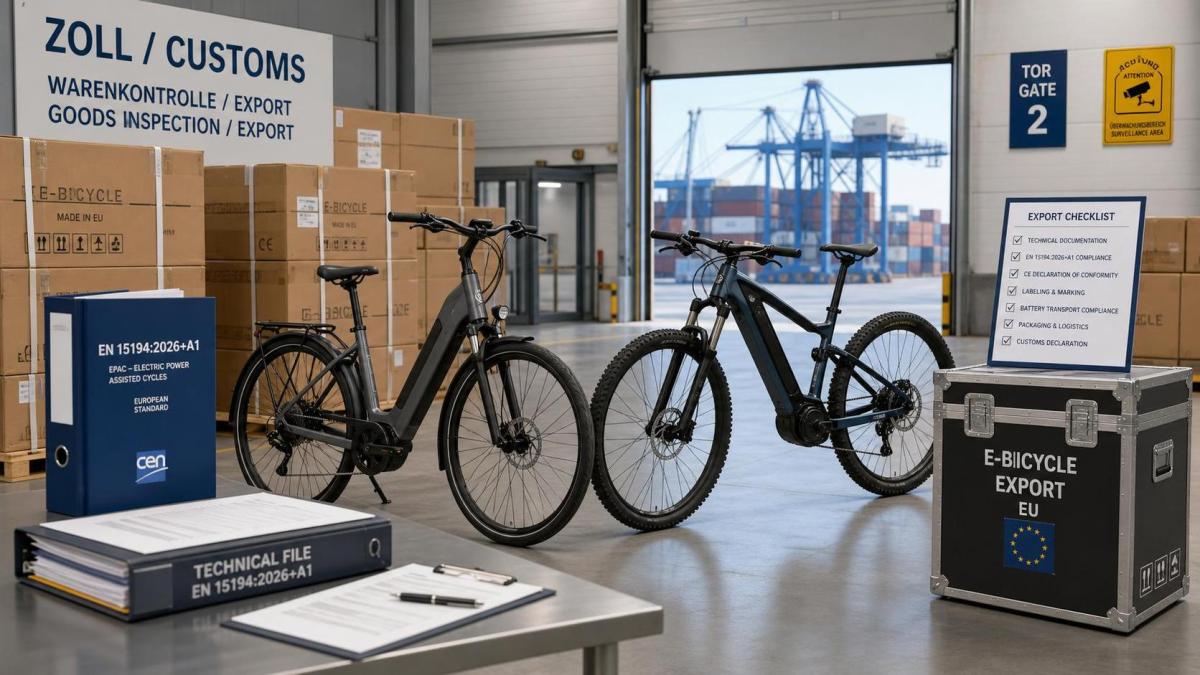
From July 1, 2026, the EU customs regime has moved into stricter enforcement of EN 15194:2026+A1, with clearance halted for electric bicycles that do not carry A1 supplementary certification issued by notified bodies such as TÜV or SGS. For exporters, manufacturers, compliance teams, and supply chain service providers involved in EPAC categories including Urban Commuter Pedelecs and Mid-drive E-Mountain Bikes, this development matters because it shifts compliance from a technical requirement on paper to an immediate customs gate affecting shipment timing and cost.
What Has Taken Effect at the Border
The confirmed change is that, as of July 1, 2026, EU customs are strictly applying the latest revised version of EN 15194:2026+A1. Under this enforcement approach, electric bicycles without A1 supplementary certification issued by notified bodies such as TÜV or SGS are not being released for customs clearance.
The scope described in the provided information includes EPAC products such as Urban Commuter Pedelecs and Mid-drive E-Mountain Bikes. The updated requirements specifically include motor response delay of no more than 100 ms, redundant verification for torque sensors, and encrypted communication for battery BMS systems.
The provided information also states that the change directly affects customs clearance timing and compliance costs for Chinese exporters.
Where the Pressure Is Likely to Appear First
Export-facing bike suppliers and brand owners
From an industry perspective, this group is likely to feel the impact first because customs release is tied directly to certification status. The immediate pressure point is shipment execution: products that fall within the covered EPAC categories but lack the required A1 supplementary certification face interruption at the border rather than a later-stage compliance dispute. What deserves closer attention is whether current export models and document packages are aligned with the enforced version of the standard.
Manufacturing and technical integration teams
Analysis shows that the operational impact is not limited to paperwork. The cited requirements on motor response delay, torque sensor redundancy, and BMS communication encryption point to product-side verification work. For manufacturers and engineering teams, the affected business link is product readiness for export, especially where drive systems, sensors, and battery management functions must match the enforced technical conditions reflected in certification.
Certification, customs, and logistics service providers
Observably, service providers involved in testing, certification coordination, documentation review, customs declaration, and delivery planning may face tighter execution windows. Their exposure comes from the fact that clearance is being denied for non-certified units, which raises the practical importance of document accuracy, certification completeness, and shipment scheduling. The key change to watch is whether service workflows are being adjusted around A1 supplementary certification as a pre-shipment requirement rather than a parallel compliance item.
What Companies Should Watch Now
Check whether affected models already match the enforced standard version
Companies shipping EPAC products into the EU should focus on whether the models in scope are supported by A1 supplementary certification from notified bodies such as TÜV or SGS, as described in the provided information. The practical issue is not only whether a product was previously certified, but whether its certification status matches the version now being strictly enforced at customs.
Separate technical conformity from document readiness
Analysis shows that compliance risk here has two layers: meeting the cited technical requirements and being able to present the corresponding certification outcome during clearance. Businesses should therefore pay close attention to whether technical files, certification records, and customs-facing documents are consistent with one another for each shipment.
Review delivery commitments and customer communication
Because the provided information points directly to customs timing and compliance cost pressure, exporters and trading companies should closely review delivery schedules, handover timing, and customer-facing commitments for affected e-bike categories. What deserves closer attention is whether orders already in the export pipeline may require additional coordination before shipment.
Keep watching for further official wording and implementation detail
Observably, the commercial impact of a stricter rule often depends on how consistently it is applied in practice. Companies should continue tracking any later official wording, clarifications, or implementation updates related to EN 15194:2026+A1 enforcement, especially where those updates may affect scope interpretation, certification presentation, or clearance procedures.
How This News Is Best Understood
Analysis shows that this is more than a routine standards update because the provided information ties the rule directly to customs release. That makes it a concrete compliance threshold rather than a distant regulatory signal. At the same time, it is more appropriate to understand this as both an immediate operational change and a longer-term compliance signal: immediate because non-certified products are not being released, and longer-term because the required items involve product control, sensing architecture, and BMS communication.
Observably, the news should not be read as a complete picture of all market outcomes. What it clearly establishes is the enforcement direction described in the provided information and the areas where exporters and supply chain participants need closer operational attention.
What the Industry Can Conclude at This Stage
At this stage, the clearest takeaway is that EN 15194:2026+A1 enforcement has become a customs-facing issue for uncertified e-bikes entering the EU. For businesses connected to EPAC exports, the immediate concern is not abstract regulatory change but whether certification status, technical readiness, and shipment execution are aligned.
From an industry perspective, it is more appropriate to understand this development as a confirmed short-term compliance barrier with broader long-term implications for export preparation and technical validation. Some downstream effects may still require continued observation, but the enforcement signal itself is already explicit in the provided information.
Basis of This Article and Ongoing Verification
This article is based on the user-provided news title, event date, and event summary. The confirmed inputs used here are the July 1, 2026 timing, the strict EU customs enforcement of EN 15194:2026+A1, the halt in clearance for electric bicycles lacking A1 supplementary certification from notified bodies such as TÜV or SGS, the referenced EPAC categories, and the cited technical requirements concerning motor response delay, torque sensor redundancy, and BMS communication encryption.
For this type of industry update, source categories that are usually relevant include official notices, company announcements, industry association information, authoritative media reporting, and standard-organization documents. No specific official source link was provided in the input, so further verification remains necessary. Continued attention should be given to any later official clarification, enforcement detail, or implementation update related to customs application of EN 15194:2026+A1.
Related Intelligence
 Gym CAPEX & E-Bike DTC PremiumOct 27, 2026Commercial Ellipticals for Hotels: Space, Noise, and Durability ChecklistChoose commercial ellipticals for hotels with confidence. Explore our space, noise, and durability checklist to avoid costly mistakes and create a quiet, guest-friendly fitness room.
 Urban Commuter PedelecsOct 27, 2026Maryland Ranks Second in E-Bike and E-Scooter Deaths, Study SaysMaryland ranks second in e-bike and e-scooter deaths, a study says. Explore what the ranking means for rider safety, protective gear and the micromobility industry.
 Gym CAPEX & E-Bike DTC PremiumOct 26, 2026Fitness Equipment Market Intelligence: Demand Trends Guiding Gym CAPEXExplore the fitness equipment intelligence market to spot demand trends, prioritize gym CAPEX, and make smarter investments in capacity, reliability, and lifecycle value.
 Optical Heart Rate MonitorsOct 25, 2026Sports Performance Wearables Manufacturers: Heart Rate Accuracy and MOQ ChecksChoose a sports performance wearables manufacturer with confidence. Explore heart rate accuracy tests, MOQ checks, and pilot terms to reduce sourcing risk before you commit.
 Urban Commuter PedelecsOct 25, 2026California Passes Four Laws Targeting Unsafe E-Bike Use in Silicon ValleyCalifornia e-bike laws target unsafe riding in Silicon Valley with sales limits, age rules and helmet requirements. Learn what the four measures could mean for riders and sellers.
 Compression Recovery GearOct 24, 2026Digital Authority Building: How Businesses Turn Expertise Into Online TrustDiscover how digital authority building turns expertise into buyer trust. Learn to publish credible evidence, answer key questions, and guide prospects toward confident purchasing decisions.
 Urban Commuter PedelecsOct 24, 2026Washington DDOT to Fine Operators Over Improperly Parked E-Bikes and ScootersWashington DDOT will fine e-bike and scooter operators for delayed removal of improperly parked devices. Explore the parking rules and changes to low-income rider credits.
 Gym CAPEX & E-Bike DTC PremiumOct 23, 2026Self-Generating Fitness Equipment: Do Energy Savings Justify the Cost?Explore energy efficient fitness equipment with self-generating power. Compare real savings, purchase costs, and installation benefits to see what pays off for your gym.
 Direct Drive Smart TrainersOct 23, 2026Interactive Strength Q3 Update: Third Space Deploys Wattbike EquipmentInteractive Strength’s Q3 update highlights Wattbike equipment at Third Space’s London studio. Explore the deployment, Ergatta rowing classes and key insights for fitness equipment buyers.
 Magnetic Resistance Spin BikesOct 22, 2026Choosing Smart Indoor Bikes for Spin Classes: Connectivity and Durability ChecksChoosing smart indoor bikes for spin classes? Discover essential connectivity, durability, and service checks to reduce downtime and invest confidently in your studio.
 MIPS Carbon Cycling HelmetsOct 22, 2026Belgian Aerobag Cycling Airbag Named to TIME’s 2026 Best Inventions ListAerobag cycling airbag reportedly joins TIME’s 2026 Best Inventions list. Explore WorldTour testing, Nalini’s planned bib shorts and key safety questions for buyers.
 Optical Heart Rate MonitorsOct 21, 2026Wearable Fitness Technology Compliance: US and EU Rules for Heart Rate MonitorsExplore wearable fitness technology compliance for heart rate monitors. Navigate US FDA, FCC, EU MDR, radio, and privacy rules to support a confident market launch.
 Direct Drive Smart TrainersOct 21, 2026Garmin Launches Tacx Nēra Smart Indoor Trainer With Multi-Directional MovementDiscover the Garmin Tacx Nēra smart indoor trainer, featuring multi-directional movement and precise resistance for immersive indoor cycling. Explore what sets it apart.